
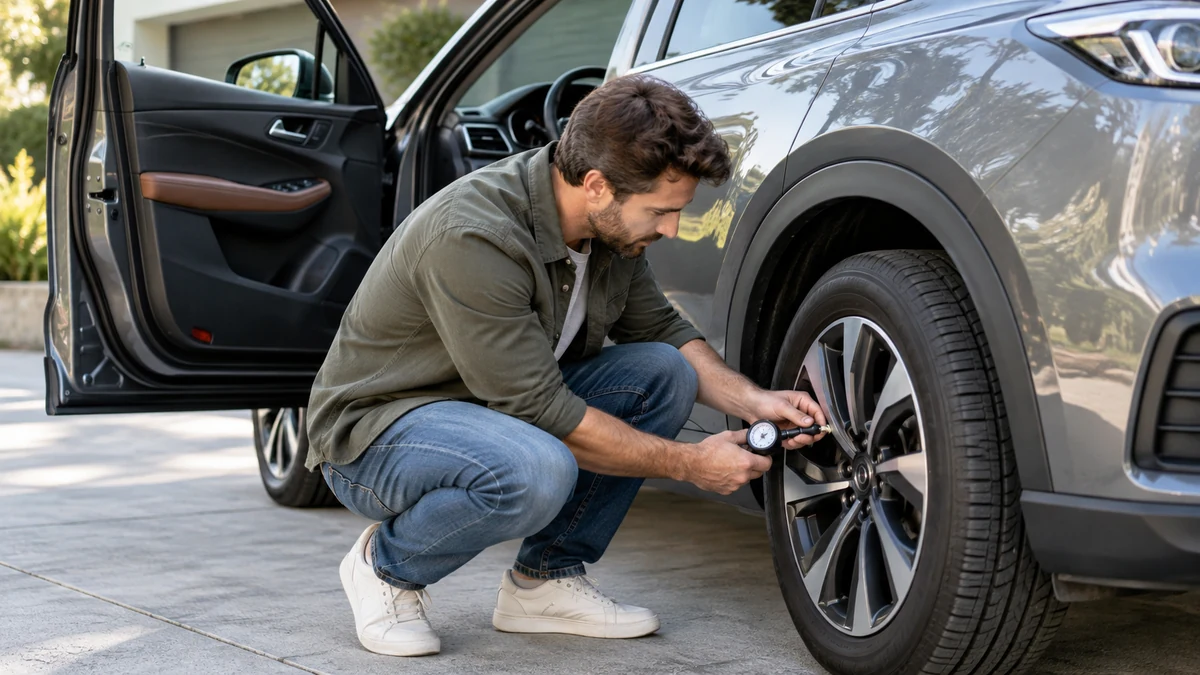

Proper tire pressure helps your vehicle handle predictably, supports tire life, and can improve fuel economy. The best routine is simple: check all four tires at least once a month and before long trips.
Use the recommended cold tire pressure listed on your vehicle’s Tire and Loading Information label, usually found on the driver-side door edge, doorjamb, or door pillar. Your owner’s manual also lists this information.
Do not inflate tires to the maximum PSI printed on the tire sidewall. That number is the tire’s maximum pressure rating, not necessarily the correct pressure for your specific vehicle.
Check tires when they are cold
A cold reading means the vehicle has been parked for at least three hours. Driving warms the tires and raises the measured pressure, making the result less accurate. Check every tire with a reliable gauge, including the spare if your vehicle has one.
What to inspect while checking pressure
- Look for cuts, cracks, bulges, or objects stuck in the tread.
- Check for uneven tread wear across each tire.
- Pay attention to a TPMS warning light, but do not rely on it instead of monthly checks.
- Use the manufacturer’s recommended pressure even if front and rear tires require different values.
If a tire repeatedly loses air, has visible sidewall damage, or causes vibration or pulling, have it inspected by a qualified tire professional.