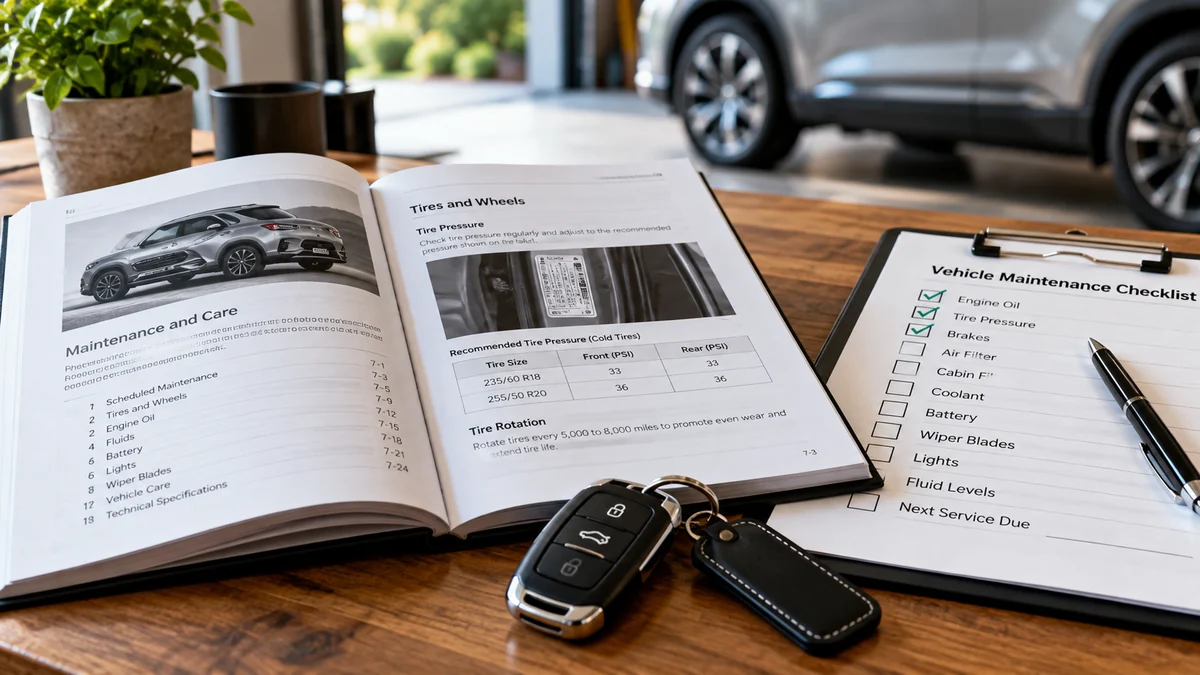

Your vehicle’s owner’s manual is the starting point for routine maintenance. It contains the manufacturer’s recommended schedule for your specific engine, drivetrain, fluids, filters, inspections, and replacement items.
There is no single maintenance schedule that fits every car, truck, SUV, hybrid, or electric vehicle. Service needs can vary by model year, engine type, climate, driving conditions, and how the vehicle is used.
Start with the normal maintenance schedule
Look for the maintenance section in your owner’s manual or manufacturer app. It typically lists mileage- or time-based services, such as oil changes, tire rotations, brake inspections, cabin-air-filter replacement, and fluid checks.
Check whether severe-service guidance applies
Many manuals provide a separate schedule for demanding conditions. These may include frequent short trips, stop-and-go driving, towing, heavy loads, extended idling, very hot or cold weather, dusty roads, or commercial use.
Do not accept unnecessary service without asking questions
- Compare a repair shop’s recommended service with your owner’s manual.
- Ask why a service is needed if it is not listed in the manufacturer schedule.
- Keep records of completed maintenance, including the date, mileage, parts, and fluids used.
- Use the fluid type, viscosity, and specification required by your vehicle manufacturer.
Following the manufacturer schedule helps you avoid both neglected maintenance and unnecessary work. If you are unsure which schedule applies, ask a qualified technician to explain the recommendation using your vehicle’s manual and current mileage.