
An emergency kit should fit your climate, vehicle, and usual routes. It is not a substitute for maintenance, safe driving, or calling emergency services when someone is in danger.
Practical basics
- Owner’s manual, registration, and insurance details
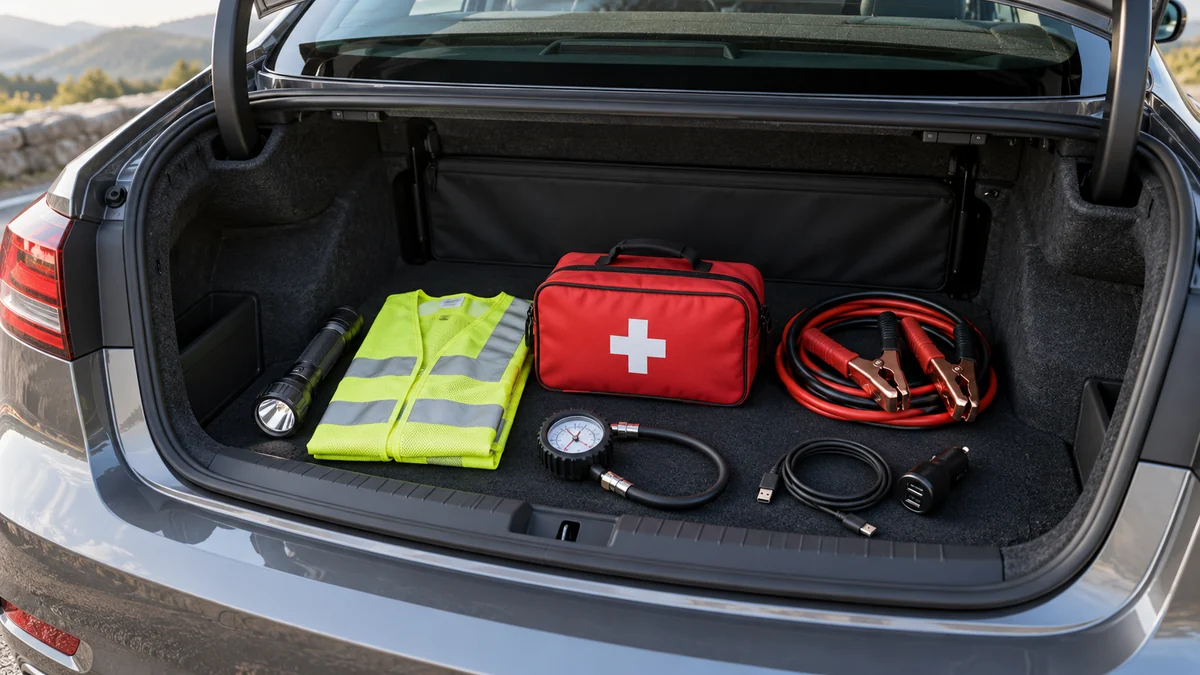
- Flashlight, reflective vest, basic first-aid supplies, and phone charger
- Jumper cables or a suitable jump starter, if you know how to use it
- Tire-pressure gauge, inflator or sealant only when appropriate, and seasonal supplies
Maintain the kit
Check batteries, expiration dates, and seasonal items twice each year. Never work near traffic without prioritizing a safe location and visible warning measures.